Davis's Drug Guide for Nurses
AtmosphereAppsMedical
4.8340.00 Reviews
- Version
- 6.9.0.561
- Installs
- 100.00K
- Age Rating
- Everyone
Screenshots
Our Review of Davis's Drug Guide for Nurses
 Analysis by Appyee
When a medication question comes up in the middle of a busy shift, I want a reference that helps me look up the drug without losing track of the work in front of me. Davis's Drug Guide for Nurses is a medical reference app from AtmosphereApps, aimed at nurses and students who need medication information close at hand. It is free to install, though some in-app purchases are available, and its Everyone age rating makes it broadly accessible. I’d treat it as a practical lookup companion, not a substitute for clinical judgment or local guidance.
Build a dependable medication-checking habit
My preferred way to use a drug reference is to make the lookup part of a repeatable check rather than a rushed last resort. I start with the medication name, confirm I have the right entry, and then focus on the detail that matters to the task: administration, potential effects, or a question I need to clarify. That simple sequence is more useful than skimming a long entry and assuming I have absorbed everything.
In a realistic shift scenario, a nurse may be preparing to administer a medicine and want to recheck a point before proceeding. A pocket reference can make it easier to orient to the drug and identify what to verify next. I would still compare any decision-critical detail with the patient’s orders and the clinical resources required by the workplace. The app is most helpful when it supports that process, not when it is treated as the final authority.
For students, the same habit can turn a quick lookup into a learning opportunity. Rather than memorizing an isolated fact, I’d connect the medication to its therapeutic class and consider what questions the patient might ask. That approach makes a drug guide more useful during study and clinical placements, while keeping the distinction clear between learning and making independent care decisions.
Check the fit before relying on it
The app is designed around medication safety in nursing, so its strongest fit is a nurse or nursing student who wants a focused drug reference on a phone. It may be less suitable for someone seeking a general medical encyclopedia, a patient-facing diagnosis tool, or a system for managing prescriptions. If I needed an institution-specific protocol, an order workflow, or a complete patient record, I’d use the appropriate clinical system instead.
Before relying on any medication app at work, I’d check that the installed version is compatible with my device and that I can reach the information in the setting where I expect to use it. The current version is 6.9.0.561, and the minimum operating system is 8.0. I would also check the workplace’s rules about personal phones and approved references; a useful app still has to fit the policies and conditions of the clinical environment.
It is worth understanding the purchase model before making it part of a routine. The app is free, with in-app purchases ranging from $0.99 to $38.99 per item. I’d review the available purchase options in the app and decide whether any paid material is relevant to how I plan to use it, rather than assuming every resource is included at no cost.
Your Pocket Pharmacist
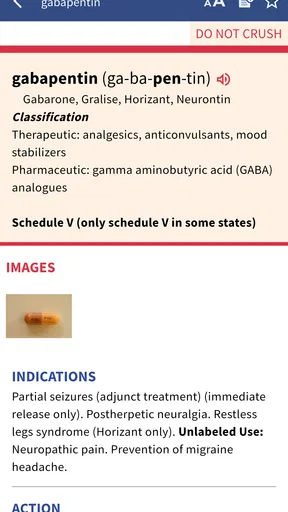
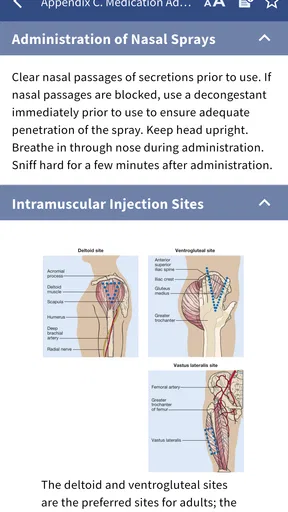
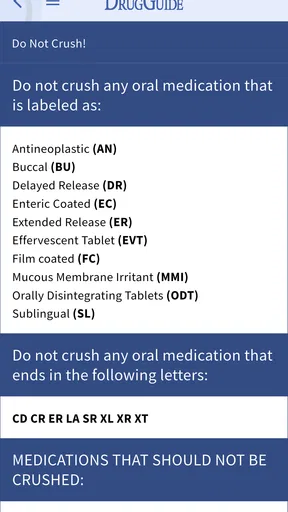
The first thing you'll notice about the Davis's Drug Guide for Nurses is how comprehensive it is. Imagine having a thick textbook crammed into your pocket without the back pain. The app boasts over 5,000 drugs, complete with detailed information on dosages, interactions, side effects, and even administration tips. It's like having your own personal pharmacist on speed dial.
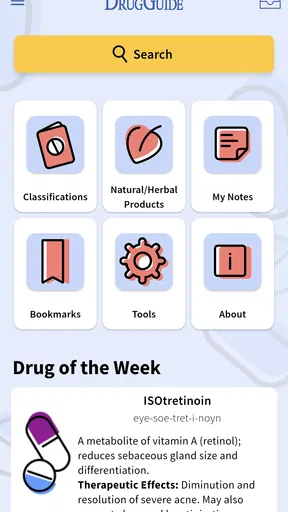
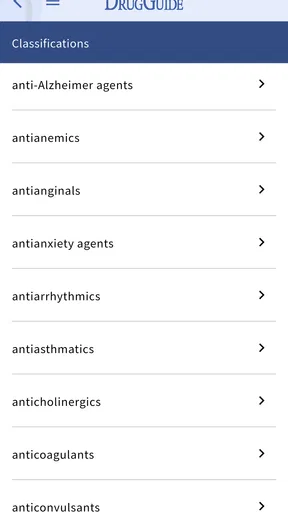
What's particularly cool is the ease of navigation. I mean, who has time to fumble through endless menus when a patient is waiting? The interface is super intuitive, letting you search drugs either by name or therapeutic classification. Plus, the app updates regularly, ensuring you're always working with the most current data.
Handy Features for the Busy Nurse
Let's talk about the features that make this app a must-have. First up, the built-in calculators are a godsend. Whether you're figuring out dosages or converting units, these tools help eliminate any guesswork. No more scribbling on your hand or napkin math – it's all right there on your phone.
Then there’s the interaction checker. We all know how crucial it is to avoid harmful drug combinations. With this feature, you can quickly verify if a new medication will play nice with a patient’s existing prescriptions. Peace of mind? Check!
And I can't forget the audio pronunciations. Ever stumbled over a tricky drug name during rounds? This feature ensures you sound like a pro, boosting your confidence and credibility.
Make repeat lookups work harder
A small but useful habit is to separate a quick orientation from a complete safety check. If I recognize a medication, I can use that familiarity to find the right entry faster, but I shouldn’t let recognition replace checking the specific details relevant to the patient and task. A drug name can be familiar while the reason for looking it up is new.
Search by therapeutic classification can also help when I know the kind of medicine but not the exact name. I’d use it to orient myself, then confirm the precise drug entry before relying on any information. This is a practical distinction for students, who may know a drug family from class but still need to distinguish among individual medicines.
Calculators can reduce arithmetic friction, but they do not remove the need to enter the right values or check the result. I’d pause to confirm units and inputs before using a calculated figure, especially if a conversion is involved. That extra moment is a worthwhile trade-off: the tool can help with the math, but the user remains responsible for whether the inputs match the clinical situation.
Customization and Personalization
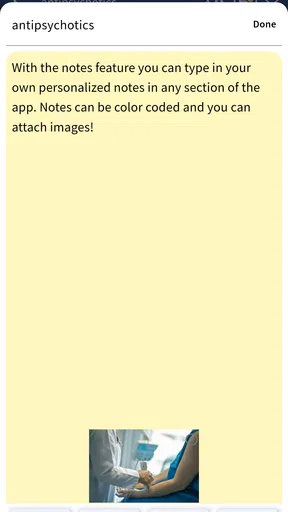
One of my favorite aspects of the app is how it lets you tailor information to your needs. You can bookmark frequently used drugs, add personal notes, and even highlight key information. This level of customization means you can build a resource that’s uniquely yours, focusing on what matters most in your specialty.
The app also includes patient teaching information. This is a game-changer. It provides clear, concise explanations that you can share, helping patients understand their treatments better. It's like having a cheat sheet for patient education.
Bookmarks and notes are most useful when they support a consistent study or work routine. I’d save entries I return to, then revisit them when there’s time to learn rather than trying to turn a note into a substitute for current instructions. Personal annotations are reminders for the person who wrote them; they should not be mistaken for official guidance or assumed to apply to another patient.
Patient teaching material can help me prepare for a plain-language conversation, but I would still tailor how I explain a medicine to the individual. A concise explanation is a starting point, not a replacement for checking understanding or addressing a patient’s particular concerns. In practice, that makes the feature valuable for preparation while leaving the actual conversation firmly personal.
User Experience
Okay, let’s chat about the user experience. The app is smooth as butter. It's fast, reliable, and doesn’t crash at critical moments. Whether you're on a high-speed hospital Wi-Fi or using your data on the go, the app performs consistently well.
Plus, the design is easy on the eyes, which is a relief after staring at screens all day. The color scheme and font choices are spot-on, reducing visual fatigue and making information easy to digest quickly.
Where a specialist reference still matters
Compared with a printed drug handbook, a phone app is easier to carry and can make searching feel more direct than turning pages. Compared with general web searches, a dedicated nursing drug guide keeps the task focused on medication information rather than sending me through unrelated results. Those are practical advantages, but neither format removes the need to judge whether a source is appropriate for the question at hand.
For a medication question governed by a local protocol or a rapidly changing institutional rule, I would favor the approved workplace resource. For a broad clinical question beyond drug information, a more comprehensive reference may be the better choice. The guide’s value is in being a focused companion for nursing medication work, not in trying to replace every other tool a clinician uses.
Its long presence in the category is reflected in its release date of July 5, 2011, while the current version is 6.9.0.561. The app has a 4.8 average from around 1.9 thousand ratings, with about 340 written reviews and over 100 thousand installs. Those figures suggest that it has found an audience, but I would still judge whether its format and purchase options suit my own needs rather than treating popularity as proof that it fits every workflow.
One useful question is whether I can find the information I need quickly enough for my own routine. I’d try a few representative searches, such as a familiar drug, one I know mainly by class, and a pronunciation I want to check. If those searches feel clear, the app may fit my day-to-day use; if I repeatedly need a different kind of resource, it is better to recognize that early.
Final Thoughts
Wrapping it up, the Davis's Drug Guide for Nurses is an essential tool for anyone in the nursing field. It’s not just about having drug information at your fingertips; it’s about having the right information, quickly and reliably. This app turns your smartphone into a powerful ally in patient care, saving time and improving outcomes.
If you're a nurse, or even a student just starting out, this app should be on your must-download list. It's like having a trusty sidekick, always ready to back you up with the answers you need. So, go ahead, give it a whirl – your future self will thank you.
My practical verdict
I’d recommend it to nurses and students who want a portable, nursing-oriented place to begin medication lookups and who are comfortable checking important decisions against the appropriate clinical sources. The strongest approach is to pair it with steady habits: search carefully, verify the exact entry, use calculators thoughtfully, and treat saved notes as personal aids rather than rules.
I’d skip it if what I really needed were patient-record functions, prescribing tools, or a replacement for local protocols. For everyone else, the useful question is simple: does a focused drug guide make routine lookups and study easier on the device I use? If so, this is a reasonable app to try, with its free starting point and optional purchases understood in advance.
Verdict
Strengths of Davis's Drug Guide for Nurses
- Comprehensive drug database for quick reference.
- User-friendly interface simplifies navigation.
- Regular updates ensure current information.
- Offline access for use without internet.
- Includes detailed drug interaction checker.
Limitations of Davis's Drug Guide for Nurses
- Requires subscription for full access.
- Large app size may affect device storage.
- Some features need internet to update.
- Occasional slow loading times reported.
- Not optimized for tablet displays.
Other Releases by AtmosphereApps
View All


Similar Picks in This Category
View All
WebMD: Symptom Checker
WebMD, LLC4.1

Microphone Amplifier
DOSA Apps4.2

Anatomy Learning - 3D Anatomy
3D Medical OU4.5

Period Tracker and Calendar
SimpleInnovation4.9

GoodRx: Prescription Coupons
GoodRx4.8

CVS Health
CVS Pharmacy4.5
Frequently Asked Questions
What features does Davis's Drug Guide for Nurses offer?
Davis's Drug Guide for Nurses provides comprehensive drug information, including dosing, side effects, interactions, and nursing considerations. It offers detailed monographs, a search function, and updates to ensure accuracy. The app also includes tools for patient safety and medication administration, making it an essential resource for nursing professionals.
Is Davis's Drug Guide for Nurses available offline?
Yes, Davis's Drug Guide for Nurses offers offline access to its content, allowing users to consult drug information without an internet connection. This feature is particularly useful for nurses working in areas with limited connectivity, ensuring they have access to vital information at all times.
How often is the information updated in the app?
The app receives regular updates to ensure the drug information is current and accurate. Updates typically include new drug entries, revised guidelines, and changes in drug interactions, reflecting the latest medical standards and practices. Users are encouraged to update the app frequently to stay informed.
Is there a cost associated with Davis's Drug Guide for Nurses?
Davis's Drug Guide for Nurses is a paid application, with a subscription model that grants access to its full features. While there may be a free trial period, continued use requires a subscription. Pricing details are available on the app store, and the investment is often justified by the comprehensive information provided.
Can Davis's Drug Guide for Nurses be used by students?
Absolutely, Davis's Drug Guide for Nurses is an excellent resource for nursing students. It provides clear, concise drug information and supports learning with detailed explanations and guidelines. Students can benefit from its easy-to-navigate interface and reliable data, aiding in both academic and clinical settings.
